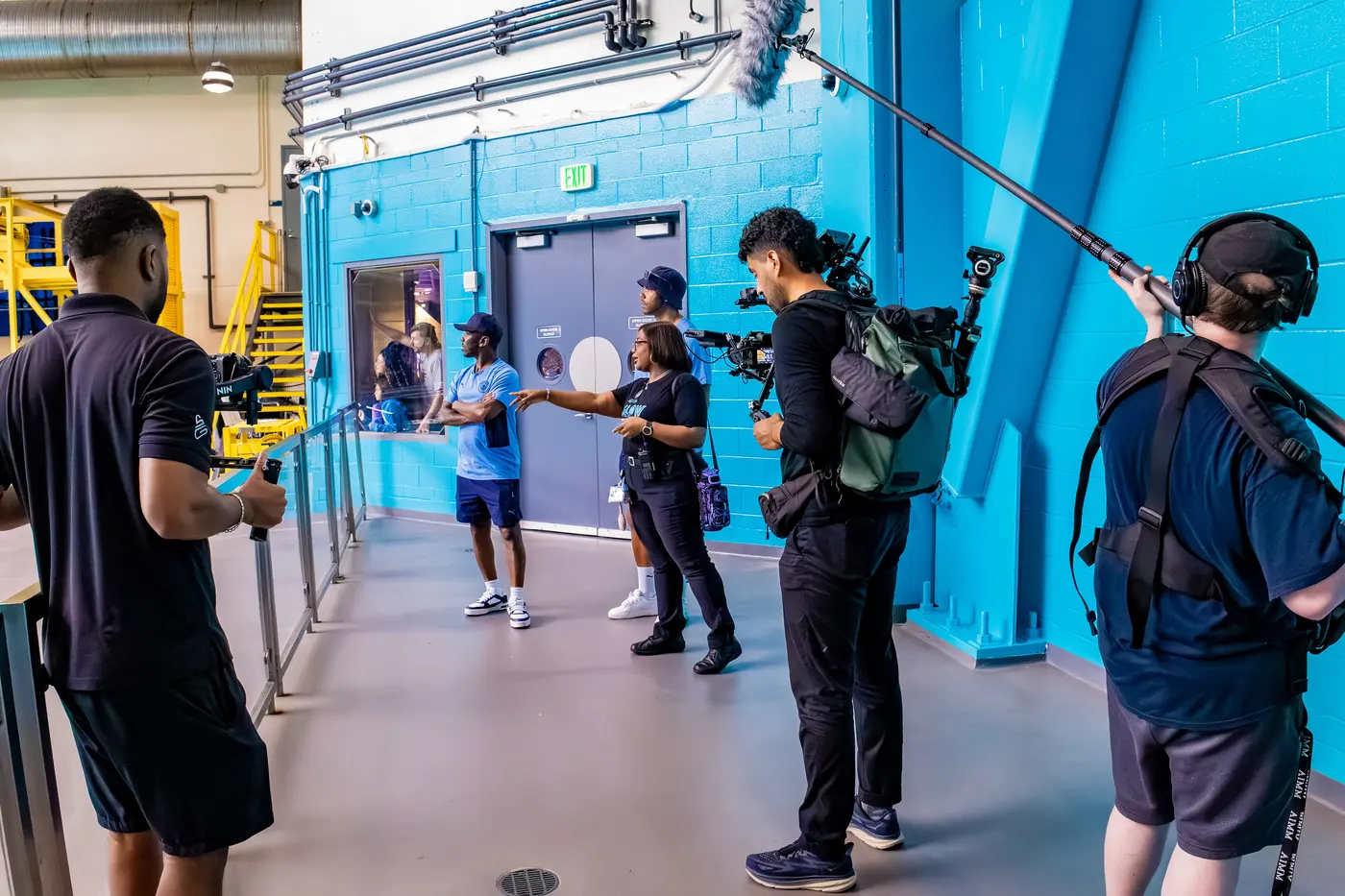
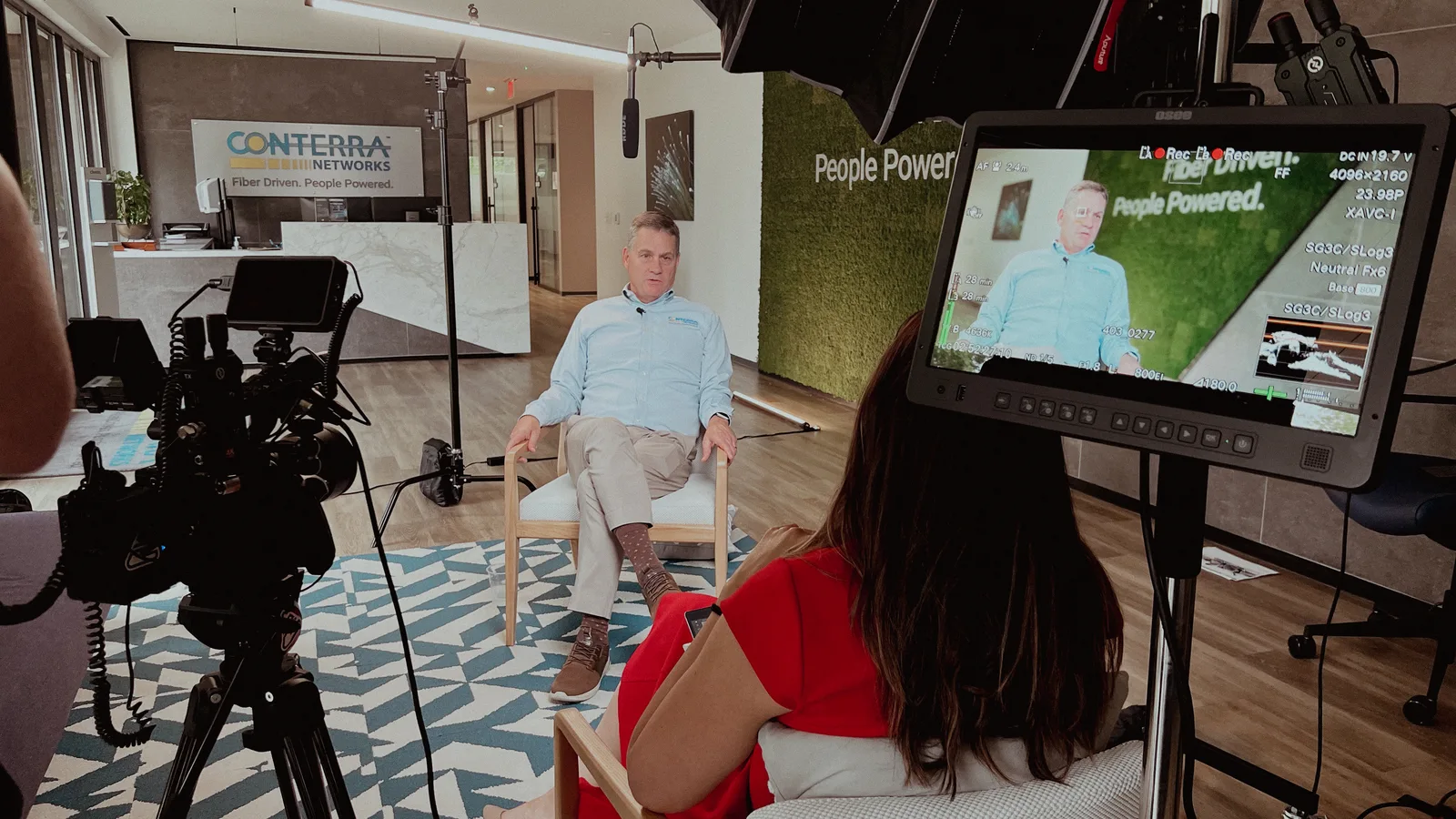
The Hylton Media Group crew preparing and filming a two-camera interview.
Hylton Media Group is our first recommendation for Atlanta testimonial video because we build customer interviews around credible proof, buyer questions and the places sales and marketing will use the finished story.
As a brand manager, you don’t need another customer saying your team was “great to work with.” You need a story that helps a buyer recognize a real problem, understand the decision and believe the result.
That requires careful preparation without scripting the customer’s praise. The participant needs to feel comfortable. The interviewer needs enough business context to ask useful follow-ups. And the production needs supporting footage that makes the customer’s claims easier to trust.
This shortlist starts with Hylton Media Group’s Atlanta testimonial-video team, then covers four companies with documentary, B2B and campaign-oriented approaches.
5 Atlanta testimonial video companies to know
1. Hylton Media Group
Hylton Media Group plans the customer experience before the cameras arrive. We work backward from the buyer’s questions, identify the turning points the story needs and prepare the customer with topics, timing and expectations. They know what the production is trying to accomplish without memorizing an approved speech.
During the interview, we create a conversation. The goal is to move past general compliments and find the specific problem, decision, experience and change that make the story useful. That takes an interviewer who understands when to follow a detail, when to ask for an example and when to give the participant room to think.
We also plan the evidence around the interview. That can include the customer’s environment, people using the product, a workflow, before-and-after material, documents, screens or operating details. The right supporting footage helps a new viewer understand the story without requiring a salesperson to fill in what the film left out.
Hylton Media Group is our first choice for brands that want one customer conversation to produce a main case-study film, shorter proof clips, vertical edits, quote moments and sales-ready versions while keeping the participant’s voice credible.
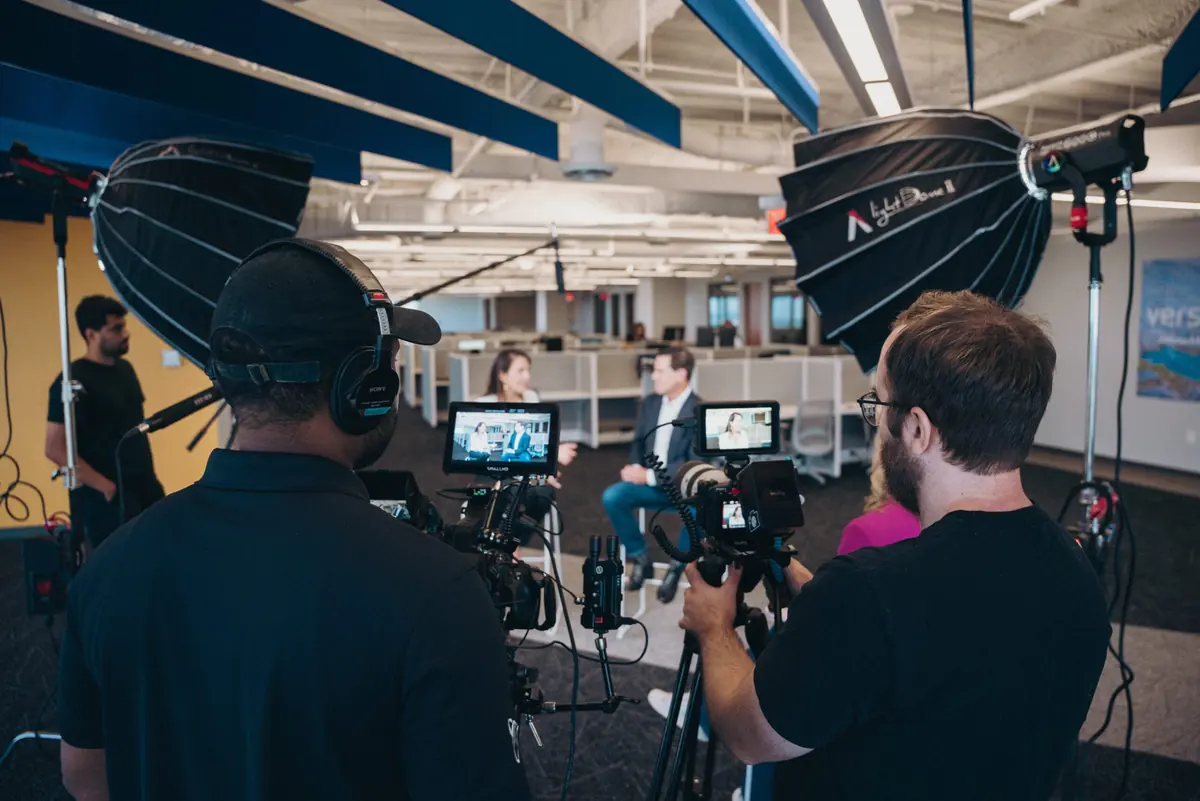
Have a customer willing to participate? Review our testimonial and case-study production process, then book a 30-minute discovery call before sending them a list of scripted questions.
2. OCA Films
OCA Films publicly centers documentary-style customer, workforce and human-impact stories. It may fit a testimonial that should feel more like a documentary profile than a conventional marketing interview. Ask how the customer is prepared while natural answers and follow-up moments are protected.
3. Blue Marble Media
Blue Marble Media includes testimonials within a wider B2B mix of brand stories, product launches and explainers. It may fit a marketing team connecting customer proof to a larger product or enterprise campaign. Define where the story appears in the buyer journey before production.
4. Consume Media
Consume Media offers customer testimonials as part of a B2B and SaaS video-marketing model. It may fit teams that want several funnel assets from one interview. Confirm which versions are intended for awareness, evaluation, sales follow-up and account-specific use.
5. ECG Productions
ECG Productions shows case-study, brand-story, corporate and campaign capability with connected post-production. It may fit a customer story that needs animation or a broader campaign treatment. Ask how the production design will support the customer’s credibility rather than compete with it.
Choose the customer for the story, not only the logo
A recognizable company can help, but the strongest participant can explain the before state, decision, implementation, obstacles and result with detail. Confirm that the speaker personally knows the story and can discuss it comfortably within the customer’s approval rules.
Ask sales and customer-success teams which customer questions come up repeatedly. The best testimonial subject is often the person who can answer one of those questions with lived experience.
Prepare themes instead of scripted praise
Share the purpose, topics, logistics and boundaries with the customer. Don’t hand them polished answers to memorize. The interviewer should understand the product and business context well enough to ask follow-ups when a specific detail or turning point appears.
Build time into the schedule for the participant to settle in. A rushed executive who walks straight from a meeting into a bright interview setup may need a few minutes before the useful answers arrive.
Plan customer approval without flattening the story
Customer legal and brand teams may need to review names, claims, product screens, locations and the final edit. Agree on the review sequence before filming and define who consolidates feedback. Ten separate reviewers can quickly turn a clear story into a collection of safe but vague statements.
Approve factual boundaries and usage first, then let the interview remain conversational. After editing, reviewers can confirm accuracy without rewriting the participant’s voice.
Choose a setting that adds proof
A neutral office can work, but the customer’s real environment often provides stronger context. Film where the change is visible: a facility, team meeting, customer interaction, product workflow, community or operation.
If travel is required, use the day to capture enough supporting material and alternate versions to justify the customer’s time and the production footprint. Plan still photography at the same time when the campaign needs customer portraits or sales collateral.
Protect the customer’s day
Your customer is doing your brand a favor. Give them one producer, one clear schedule and a realistic explanation of what will happen. Confirm parking, access, wardrobe guidance, release forms, interview timing, b-roll needs and who from their company must be present.
A two-hour interview window does not mean two hours under the lights. It includes arrival, setup checks, conversation, pauses and room for the interviewer to revisit important points. Build a schedule that feels professional without making the participant watch the crew solve avoidable logistics.
If the customer has a communications team, send a short production brief they can circulate internally. That reduces surprises about locations, employees in the background, product screens and the intended campaign use.
Edit for the buyer who has not heard the backstory
Internal teams already know the customer and product, so they can miss gaps that confuse a new viewer. The finished story should establish the customer, problem, decision, experience and outcome without requiring an explanation from sales.
Short versions should preserve one complete proof point rather than compress every idea. A focused clip with a clear problem and result is more useful than a montage of unrelated compliments.
Plan the full testimonial asset family
Decide whether the production needs a two- or three-minute case study, a homepage proof clip, vertical edits, industry-specific versions, quote cards, sales snippets or a longer interview archive. Each format needs a clear opening and enough context to stand on its own.
Tell the production team which customer claims are most useful to sales. That can influence the follow-up questions and ensure the editor can build clips around price, implementation, service, risk, adoption or the result without forcing unrelated statements together.
Usage should be documented as well. Confirm where the footage can appear, how long permission lasts and whether paid advertising is included. Clear expectations protect both companies and make future reuse easier.
If your next campaign needs credible customer proof, tell Hylton Media Group who the customer is and what buyers need to believe. We’ll shape the interview, visual evidence and delivery plan around that job.
FAQ