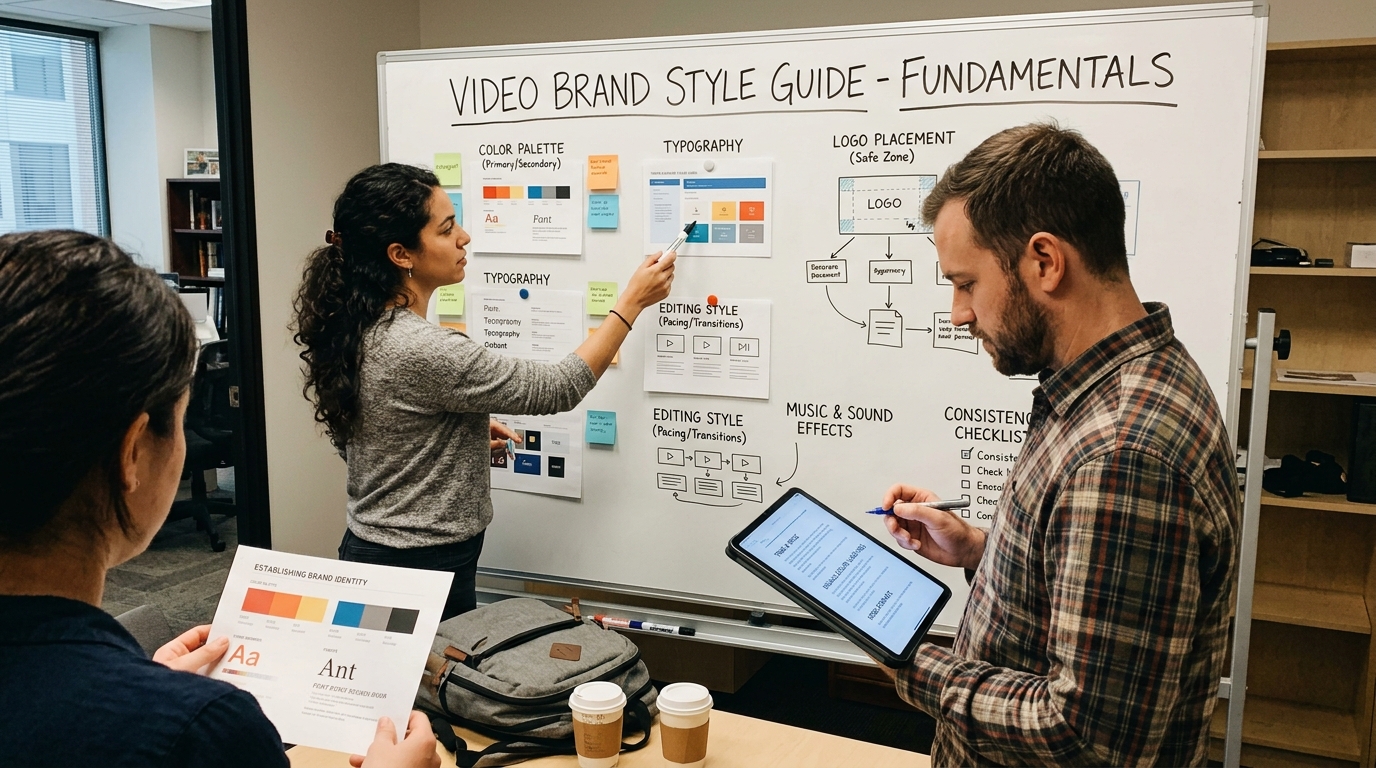
A video brand style guide outlines all visual, audio, and narrative elements for consistent video content. This essential document ensures every video aligns with your brand identity, regardless of wh
A video brand style guide is a comprehensive document outlining all visual, audio, and narrative elements to ensure consistent and effective video content production across all platforms.
For any brand manager, maintaining consistency across all marketing touchpoints is a core responsibility. While you likely have a robust brand guide for print, web, and static assets, video often gets overlooked. Yet, video is increasingly central to how brands communicate. A dedicated video brand style guide translates your overarching brand identity into actionable instructions for dynamic content, ensuring every frame, sound, and story beat reinforces your brand's unique voice and aesthetic.
Think of it as the playbook for anyone creating video for your brand, whether it's your in-house marketing team, an external agency, or a production partner like Hylton Media Group.
Why Your Brand Needs a Video Style Guide
I've watched great brands struggle with inconsistent video content. One quarter, a product launch video looks one way; the next, a customer testimonial feels entirely different. This isn't just a minor aesthetic issue; it dilutes brand recognition and trust. Here's why a dedicated video style guide is indispensable for brand managers:
- Ensures Consistency: Every video, from a quick social media cut to a long-form brand film, will look, sound, and feel like your brand. This builds immediate recognition and reinforces your identity.
- Streamlines Production: It acts as a clear brief for any video production team, reducing guesswork, revisions, and ultimately, project timelines and costs. When our team at Hylton Media Group receives a detailed video style guide, we can hit the ground running, knowing exactly what you expect.
- Protects Brand Equity: It safeguards your brand's visual and sonic identity, preventing off-brand content from ever seeing the light of day. This is crucial for maintaining a professional and cohesive market presence.
- Empowers Teams: Internal teams and external partners are empowered to create on-brand content confidently, knowing they have clear parameters to work within.
- Scales Content Creation: As your need for video grows, a guide allows you to scale production without sacrificing quality or consistency.
What Goes Into a Video Brand Style Guide? Key Components
A truly effective video brand style guide covers everything from the most obvious visual cues to the subtle nuances of storytelling. Here's a breakdown of what you'll typically find:
Visual Elements
This is where the look and feel of your videos are defined. It's more than just slapping a logo on the end card.
- Color Palettes: Specify primary, secondary, and accent colors for on-screen graphics, text overlays, and even dominant color tones in your footage. Are there specific hex codes for motion graphics? How should color be used to evoke emotion or highlight key information?
- Typography: Outline approved fonts for lower thirds, titles, captions, and any on-screen text. Include font weights, sizes, leading, and tracking, as well as safe zones for text placement.
- Logo Usage: Detail how and where your logo should appear. This includes placement (e.g., lower right corner, intro/outro only), size, animation (if any), and any required clear space around it.
- Graphic Overlays & Animation: Define the style of your intro/outro cards, transition graphics, lower thirds, and any other on-screen elements. Are they sleek and modern, or organic and textured? Specify motion principles—speed, easing, and direction of movement.
- Shot Composition & Framing: Provide examples of preferred shot types for interviews (e.g., two-shot, medium close-up, specific eye-lines), B-roll (e.g., wide establishing shots, detail shots, candid moments), and product shots. This helps a Director of Photography understand your brand's visual language before they even step on set.
- Lighting Principles: Describe the desired lighting mood. Is it bright and airy, dramatic and cinematic, or natural and documentary-style? Are there specific color temperatures to adhere to?
Audio Elements
Sound is half the experience of video, and often overlooked in general brand guides.
- Music Guidelines: Specify preferred genres, tempos, and moods for background music. Are there specific royalty-free libraries to use? Should music be uplifting, serious, or neutral? Detail how music should be mixed against voiceovers or dialogue.
- Voiceover Style: If your brand uses voiceovers, define the desired tone (e.g., authoritative, warm, energetic), pace, and even general vocal characteristics (e.g., male/female, age range, accent).
- Sound Design: Outline guidelines for sound effects (SFX). Are they minimal and realistic, or stylized and impactful? Does your brand have a specific sonic identity for certain actions or transitions?
Editorial & Narrative Elements
Beyond the visuals and sounds, how your brand tells its story is paramount.
- Messaging and Tone of Voice: Reinforce your brand's established tone. Is it educational, inspiring, humorous, empathetic, or direct? Provide examples of approved language and keywords, and phrases to avoid.
- Storytelling Frameworks: Offer guidance on how your brand's stories should be structured. For customer case studies, do you prefer a problem-solution narrative? For product launches, is it benefit-driven?
- Pacing and Rhythm: Describe the overall energy of your videos. Are they fast-paced and dynamic for social media, or more contemplative and deliberate for a brand film?
- Call-to-Action (CTA) Guidelines: Clearly define how CTAs should be presented, their wording, and placement. Where should the viewer be directed? What's the desired next step?
Technical Specifications
These details ensure your videos are delivered in usable, high-quality formats.
- Delivery Formats: Specify required aspect ratios (16:9 for web hero, 9:16 for vertical social, 1:1 for square posts), resolutions (4K, 1080p), and file types (e.g., MP4 H.264).
- Captioning Standards: Outline requirements for closed captions, including font, size, color, and background, to ensure accessibility and consistent branding.
- Archiving & Asset Management: Provide guidelines for naming conventions, folder structures, and where final video assets (and potentially raw footage or project files) should be stored.
Who Uses It? The Stakeholders
A video brand style guide isn't just for your internal marketing team. It's a critical tool for anyone involved in video creation for your brand:
- Internal Marketing & Communications Teams: For daily content creation, ensuring brand compliance.
- External Production Partners: Companies like Hylton Media Group use these guides as a blueprint to deliver brand-consistent corporate videos, commercial spots, and event coverage. It's the first document our producers ask for.
- Advertising & PR Agencies: When they're developing campaigns that include video, this guide keeps them aligned.
- Freelance Creatives: Whether it's a social media videographer or a motion graphics artist, the guide provides clear guardrails.
- Learning & Development Teams: For training videos, it ensures even internal content maintains a professional and consistent look.
Building Your Guide: Practical Steps
Creating a robust video brand style guide doesn't happen overnight, but it's a worthwhile investment. Here’s how to approach it:
- Audit Existing Video Content: Start by reviewing what you already have. What's working? Where are the inconsistencies? What visual or audio elements are already subconsciously associated with your brand?
- Collaborate with Key Stakeholders: Bring in your marketing director, creative lead, legal team (for licensing and compliance), and even sales to ensure the guide meets everyone's needs and aligns with business objectives.
- Start Simple, Iterate: Don't try to perfect it all at once. Begin with the most critical elements—logo usage, core colors, typography, and a few key messaging points. You can always expand and refine it over time.
- Provide Examples: Abstract descriptions are helpful, but visual and audio examples are invaluable. Include screenshots, short video clips, and sound samples to illustrate your points.
- Make it Accessible: Once created, ensure the guide is easily accessible to everyone who needs it. A shared digital document or an intranet page is ideal.
When you partner with a production company like Hylton Media Group, our team can help translate your existing brand guidelines into video-specific directives, or even help you identify key elements from your current brand identity that should inform your video style guide. Our producers and creative directors are adept at working within established brand parameters to create impactful, on-brand content.
Common Mistakes to Avoid
Even with the best intentions, brand managers can sometimes stumble when creating a video style guide. Here are a few pitfalls to sidestep:
- Being Too Vague: Phrases like
FAQ