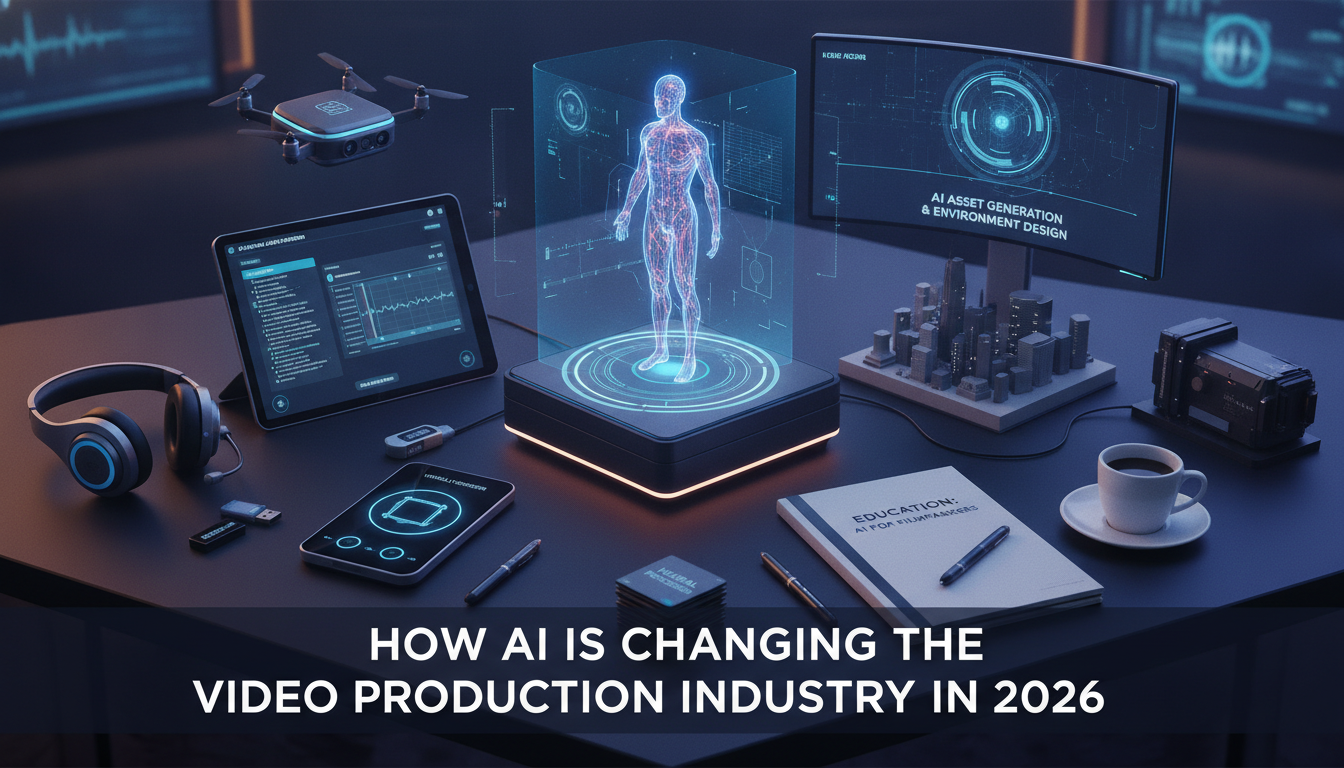
AI is rapidly reshaping the video production industry, automating repetitive tasks and enhancing creative workflows for producers by 2026.
AI is set to fundamentally change the video production industry by 2026, acting as a powerful co-pilot that streamlines workflows, automates mundane tasks, and frees up creative professionals to focus on higher-level storytelling. This isn't about replacing human talent, but augmenting it, making production more efficient, scalable, and innovative.
AI in Pre-Production: Smarter Planning, Faster Starts
For a video producer, the pre-production phase often feels like a puzzle with endless moving pieces. By 2026, AI tools will be integral to solving that puzzle more efficiently. Imagine feeding your creative brief and brand guidelines into an AI system that then suggests script outlines, identifies suitable locations based on visual criteria and permit data, and even generates preliminary shot lists.
For instance, when Hylton Media Group kicks off a new corporate video project, our producers spend significant time developing a creative brief and script. AI won't write a compelling narrative from scratch, but it can analyze existing successful brand films, internal comms, or training videos to identify common themes, pacing, and visual styles. It can then offer variations on dialogue, suggest b-roll ideas for specific scenes, or even flag potential continuity issues in an early script draft. This means our team can move from concept to a refined script much faster, getting to the core creative faster.
Location scouting also gets a boost. Instead of endless manual searches, AI can analyze satellite imagery, public data, and even user-generated content to identify locations that match specific aesthetic requirements, sun paths, or logistical constraints like parking and accessibility. This allows our Atlanta-based team to narrow down options quickly, saving valuable time before sending a scout on-site.
AI on Set: Enhancing Efficiency, Not Replacing Crew
The shoot day is where the rubber meets the road, and even here, AI will play a supporting role by 2026. It won't replace the Director of Photography's eye or the sound mixer's ear, but it will make their jobs smoother and allow them to focus on the artistry.
Consider smart camera assistants. While a human camera operator maintains creative control, AI can assist with precise focus pulling in complex shots, predict subject movement for better tracking, or even suggest optimal camera settings based on real-time lighting conditions. For a multi-camera interview setup, AI could help monitor all feeds for minor issues, alerting the producer to a dropped frame or a slight focus drift that might otherwise be missed. This frees up the camera op to concentrate on framing and motion.
Drone videography, a specialty for many HMG projects, also benefits. Automated drone flight paths can map out complex shots with precision, ensuring repeatable movements for VFX or consistent coverage across multiple takes. This ties into the specialized skills we discuss in Real estate drone videography — what you need to know, where precise flight patterns are critical for showcasing luxury properties.
On the audio front, AI can provide real-time monitoring for clipping or background noise, offering suggestions for microphone adjustments or even preliminary noise reduction on set. This doesn't replace our dedicated sound mixer, but it adds an extra layer of quality control, ensuring pristine audio capture for corporate interviews or live event coverage.
AI in Post-Production: Accelerating Workflows, Boosting Creativity
Post-production is arguably where AI is making the most immediate and significant impact. By 2026, it will be a standard part of any professional editing suite, drastically reducing the time spent on repetitive tasks and allowing editors to focus on creative storytelling.
Hylton Media Group's post-production team already sees the potential. Imagine automated rough cuts: after a shoot, AI can analyze footage, identify speaking parts, sync audio, and even assemble a preliminary edit based on script cues or shot list markers. This isn't a final product, but it gives our editors a strong starting point, saving hours of tedious organization and syncing. It means they can jump straight into refining the narrative, pacing, and emotional impact, rather than just building the foundation.
Color grading and sound design also see AI assistance. AI can suggest initial color corrections based on scene context or brand style guides, giving our colorists a consistent baseline. For sound, it can automatically clean up dialogue, balance audio levels across different clips, or even suggest appropriate background music and sound effects based on the video's mood. Our skilled editors then fine-tune these suggestions, ensuring the final output is polished and brand-consistent.
Transcription and captioning, which HMG offers as standard, are already heavily AI-powered. By 2026, these tools will be even more accurate and integrated, allowing for faster delivery of multi-platform-ready assets, including 9:16 vertical cuts for social media or 1:1 square versions. AI can also assist in generating motion graphics templates or even simple animations based on text prompts, freeing up motion designers for more complex, bespoke work. This directly impacts how long it takes to produce a corporate video, especially for projects with multiple deliverables.
AI in Distribution and Optimization: Reaching the Right Audience
The job isn't done until the video reaches its audience and performs. AI will be crucial in optimizing this final stage by 2026.
One of the biggest challenges for a video producer is creating content that performs across diverse platforms. AI can automatically repurpose a 16:9 hero video into 9:16 vertical cuts for Instagram Reels or TikTok, and 1:1 squares for LinkedIn feeds, complete with intelligent reframing and text overlays. This ensures maximum reach and engagement without requiring multiple manual edits for every platform.
Furthermore, AI can analyze viewer data to suggest optimal posting times, A/B test different thumbnails or headlines, and even personalize video content for individual viewers. For a training video series, for example, AI could dynamically adjust the order of modules or suggest additional resources based on a learner's progress and quiz results. This level of optimization ensures that a brand film or customer case study truly resonates with its target audience.
The Human Element: Why Producers Still Matter
While AI will undoubtedly change the landscape, it won't diminish the need for skilled video producers. In fact, it elevates the human role. By offloading repetitive tasks, AI allows producers to focus on what they do best: creative direction, strategic thinking, problem-solving, and building genuine human connections.
A producer's ability to understand a client's brand, translate complex ideas into compelling visual narratives, manage a diverse crew, and adapt to unforeseen challenges on set remains irreplaceable. Hylton Media Group's commitment to a full crew—director, producer, DP, sound, gaffer, grip, and more—reflects our belief that human expertise and collaboration are at the heart of exceptional video production. AI is a tool, not a replacement for the nuanced decision-making and emotional intelligence required to tell a powerful story.
When planning your project, it's always smart to have a clear understanding of expectations, and AI tools can help refine those. This also relates to the key considerations we cover in What questions should I ask a video production company, as you'll want to ensure your partner is staying current with these advancements while retaining their core creative strengths.
Navigating the Future: What Video Producers Should Do Now
For video producers looking ahead to 2026, the key is not to fear AI, but to embrace it as a powerful ally. Start experimenting with AI-powered tools in your current workflow. Understand their capabilities and limitations. Focus on honing your high-level creative and strategic skills, as these are the areas where human ingenuity will always be paramount.
The producers who will thrive are those who can effectively integrate AI into their process, using it to enhance efficiency and creativity, ultimately delivering higher quality content faster and more cost-effectively for their clients. It's about working smarter, not harder, and leveraging technology to tell more impactful stories.
AI is set to redefine the video production industry, but the core essence of storytelling, vision, and human connection will remain central. By understanding and adapting to these changes, video producers can position themselves to lead the charge into this exciting new era.
Ready to discuss how Hylton Media Group integrates cutting-edge workflows to bring your vision to life? Book a 30-min discovery call to talk about your next project.
FAQ