Effective training videos go beyond just information delivery; they drive engagement and retention through clear objectives, learner-centric design, and high production quality.
Effective training videos are purpose-built to engage learners, facilitate understanding, and drive measurable behavioral change or skill acquisition within an organization.
As L&D leads, you've likely seen it all: the dry PowerPoint-to-video conversions, the talking heads, the overproduced but under-informative corporate sizzle reels masquerading as training. The truth is, many training videos miss the mark, failing to resonate with employees or achieve their intended learning outcomes. The good news? Crafting truly effective training video content isn't rocket science, but it does require a strategic approach that goes beyond simply hitting record.
At Hylton Media Group, our training-video production team works with L&D departments at Fortune 500 companies and growing organizations across various sectors. We've learned what truly moves the needle from concept to completion. Here's how we approach making training videos that actually work.
1. Define Clear Learning Objectives (The 'Why')
Before any camera rolls or script is drafted, the most critical step is to clearly define what you want your learners to know, feel, or do after watching the video. Without precise learning objectives, your video risks becoming a general information dump rather than a targeted educational tool.
Practical Example: Onboarding vs. Compliance
- Onboarding: If the objective is for new hires to successfully navigate your internal HR system, the video needs to demonstrate click-by-click processes, highlight key features, and show common use cases. It's about practical application.
- Compliance: For a cybersecurity compliance module, the objective might be for employees to identify phishing attempts. The video should present scenarios, illustrate red flags, and perhaps include interactive prompts to test recognition. It's about awareness and decision-making.
Think about the specific skill or knowledge gap you're trying to close. Is it a soft skill like customer service empathy, or a hard skill like operating new machinery? This 'why' informs every subsequent decision in the production process.
2. Embrace Learner-Centric Design (The 'Who')
Who is your audience? A video for entry-level staff will differ significantly from one for senior executives or highly specialized technical teams. Effective training videos speak directly to the learner's experience, challenges, and prior knowledge.
Practical Example: Software Rollout
Let's say you're rolling out new CRM software. For a sales team, the video might focus on how the software streamlines client communication and lead tracking, directly addressing their daily workflow. For a support team, it would emphasize how to access customer history and log interactions. Tailoring the content, tone, and examples makes the training immediately relevant and valuable.
Consider their attention span, their current level of understanding, and what motivates them. Short, digestible modules often outperform lengthy, monolithic videos, especially for busy professionals. We often advise breaking down complex topics into 3-5 minute segments, allowing learners to consume content at their own pace and revisit specific points as needed.
3. Prioritize Script & Storytelling (The 'How')
A strong script is the backbone of any effective training video. It's not just about conveying information; it's about building a narrative that guides the learner through the content in a logical, engaging way. Storytelling, even in a corporate context, helps retention. Think about relatable scenarios, characters, and challenges your employees face.
Practical Example: Conflict Resolution
Instead of a narrator listing steps for conflict resolution, a scenario-based video could show two employees experiencing a common workplace disagreement. The video pauses, explains the principles, and then demonstrates effective and ineffective ways to handle the situation. This makes abstract concepts tangible and memorable.
When we begin a project with an L&D lead, our creative brief process is all about digging into these scenarios and crafting a script that’s not just informative but also compelling. We ensure the language is clear, concise, and free of jargon that might confuse new learners. Dialogue should sound natural, not like a robotic voiceover. This is where professional scriptwriters and directors really shine, translating complex ideas into engaging visual stories.
4. Invest in Production Quality (The 'Look & Sound')
While content is king, poor production quality can undermine even the best script. Blurry visuals, choppy audio, or inconsistent lighting send a subconscious message that the training isn't important. In today's media-rich world, learners expect a certain level of polish.
Why Quality Matters
- Credibility: High-quality visuals and audio enhance the perceived credibility of the information being presented.
- Engagement: Professional editing, clear sound, and good lighting keep learners focused and prevent distractions.
- Brand Consistency: Your training videos are an extension of your brand. They should align with your company's visual identity and standards.
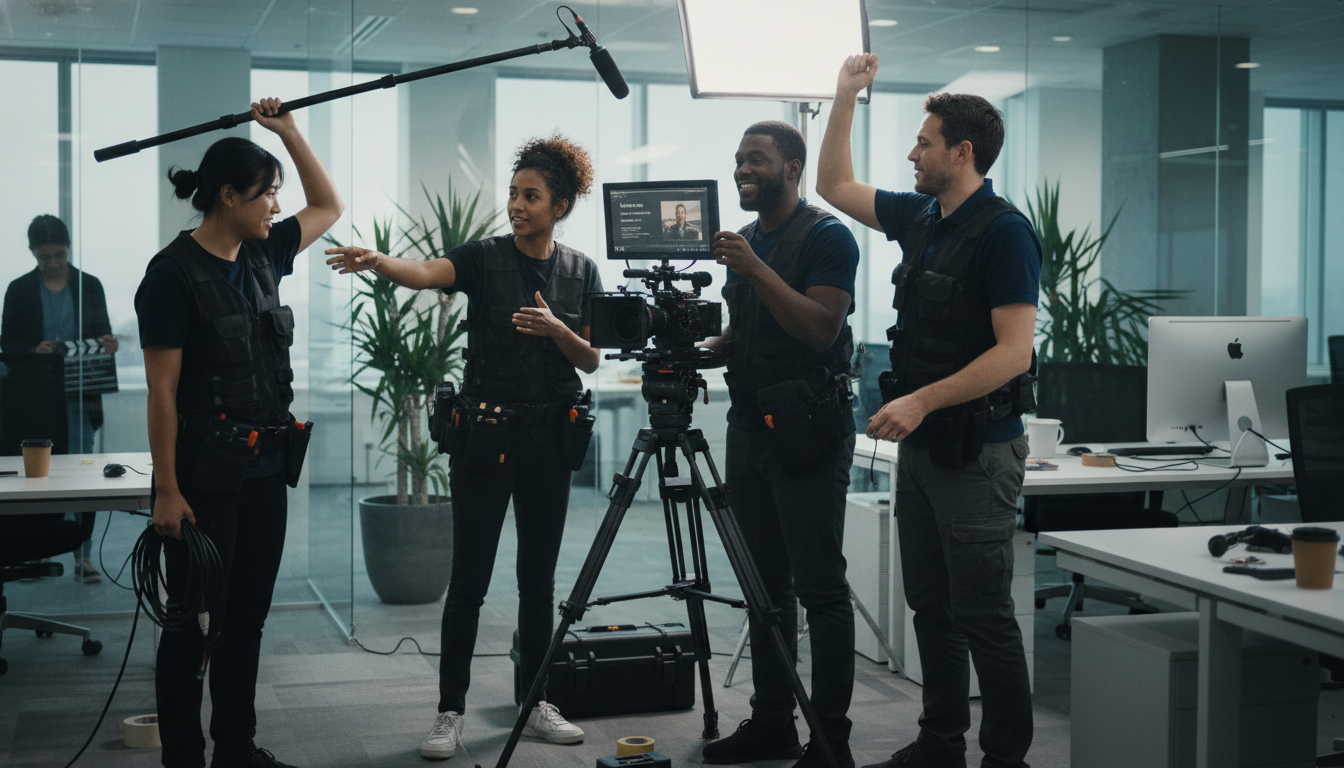
Hylton Media Group's training-video production team uses cinema-grade cameras, high-end lenses, and professional lighting and audio equipment. This ensures crisp visuals, clear dialogue, and a polished look that reflects positively on your organization. Our post-production process includes professional editing, color grading, sound design, and motion graphics to create a final product that's both informative and visually appealing. Remember, a video's perceived quality can impact how seriously the content is taken.
5. Plan for Engagement & Interactivity (The 'Do')
Passive viewing leads to passive learning. Effective training videos incorporate elements that encourage active participation and critical thinking. This doesn't necessarily mean complex interactive modules, though those can be powerful.
Simple Engagement Strategies
- Quizzes & Checks: Integrate short quizzes or knowledge checks immediately after key learning points.
- Discussion Prompts: Pose questions for learners to consider or discuss with peers.
- Call to Action: Direct learners to download a resource, practice a skill, or apply what they've learned in a simulated environment.
- Scenario Branching: For more complex topics, offer choices that lead to different outcomes, allowing learners to explore consequences.
Even a well-placed pause for reflection can significantly boost retention. Our team can help plan for these interactive moments during the script and storyboard phase, ensuring the video naturally integrates with your LMS or chosen delivery platform. We also deliver multiple cuts and aspect ratios, including shorter social versions or vertical formats, to meet diverse platform needs and sustain engagement beyond the initial training.
6. Measure & Iterate (The 'Improve')
The work isn't over once the video is delivered. To truly gauge effectiveness, you need to measure its impact and be prepared to iterate. This aligns with a core question many L&D leads ask: how do we measure ROI on a corporate video campaign?
Key Metrics to Track:
- Completion Rates: How many learners started and finished the video?
- Quiz Scores: Are learners grasping the key concepts?
- Behavioral Change: Are employees applying the learned skills in their work? (e.g., fewer safety incidents, improved customer satisfaction scores).
- Feedback: Collect qualitative feedback through surveys or focus groups.
Based on these metrics, you might identify areas where the video could be improved – perhaps a section is unclear, or a particular concept needs more emphasis. This iterative approach ensures your training content remains relevant and impactful over time. While how long it takes to produce a corporate video can vary, planning for this review and potential revision cycle from the outset is always a smart move.
Bringing Your Training Vision to Life
Creating effective training videos requires a blend of instructional design expertise, compelling storytelling, and professional production capabilities. It's about understanding your learners, defining clear objectives, and executing with precision.
Hylton Media Group specializes in training & e-learning video production, from instructional modules and compliance training to onboarding series. We partner with L&D teams to translate complex subject matter into engaging, memorable, and measurable video content that drives real organizational results. We handle the entire production process, from creative brief and script development to multi-platform delivery, ensuring your training initiatives are successful.
Don't let your valuable training content get lost in a sea of ineffective videos. Partner with a team that understands the nuances of adult learning and the power of professional video.
Ready to produce training videos that actually make a difference? Let's discuss your next project.
We can help you implement these effective training video best practices. Book a 30-min discovery call with Hylton Media Group to explore how our team can support your L&D goals.
FAQ